 StyleSDew Fashion Beauty & Lifestyle Tips for Everyday Style
Related Articles


Introduction: Makeup foundation for natural glow
If makeup was a house, the makeup foundation would be its literal foundation. It is the base upon which all other products are built. The blush that gives you that healthy glow, the bronzer that defines your face, the highlighter that makes you glow, they all rely on a good base to look their best. Get the foundation right and everything else falls into place, and get it wrong and even the fanciest eye shadow and lipstick will not be able to save the look
However,
for something as important as the foundation of a makeup look, it somehow manages to be one of the most intimidating products in the whole makeup world. Walking into any store will leave you overwhelmed by the variety of foundations available. Do you want liquid, cream, or powder? Do you want it to be matte, dewy, or natural? Do you want light or medium or full coverage? Warm or neutral undertone? There is so much to consider and so much to get wrong, and the consequences of those mistakes can be visible for all to see. The foundation is the most important part of any makeup look, and finding the right one can be challenging.
The good news is that
once you know what to look for, the options are narrowed down considerably, and the perfect foundation for your skin type and desired look is not as hard to find as most people think.
In this guide,
we will explore the different types of makeup foundation, explain undertones and how to match them to your skin, discuss the importance of coverage and how to achieve the look you desire, go over the application techniques used by professionals, and much more. Whether you are a total beginner and have no idea where to start, or you have been buying foundation for years but are still searching for your holy grail, this article will be your ultimate foundation guide.
Let us begin our journey into the world of makeup foundation.
- What Is Makeup Foundation, Really?
In short,
makeup foundation refers to a product that is used to provide an even base for the rest of the makeup, hide minor imperfections, and give the skin a healthy appearance. Modern foundations do much more than just cover blemishes; they hydrate the skin, offer protection with an included SPF, control sebum production, treat the skin, and even have anti-aging properties.
However,
foundation should not be a mask; it should enhance the beauty of your skin rather than hide it, and the perfect foundation should look natural on your skin type.
Types of Makeup Foundation: Finding Your Formula
First and foremost, you have to choose the formula that suits you.
Below are the most popular types of foundation, their description, the best skin types for them, and their advantages and disadvantages.
Liquid Foundation
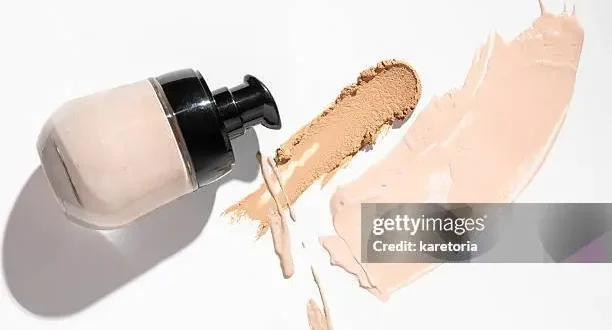
The most popular and versatile type of foundation, liquid foundation comes in a bottle with a pump, dropper, or a pour hole at the top. It varies in consistency from sheer and runny to thick and creamy.
Best For: Most skin types
Coverage: Sheer/medium/full
Finish: Natural, dewy, satin
Pros: Easy to apply, provides various levels of coverage, hydrating, lasts for a long time
Cons: Can be too thin for some skin types
Cream Foundation
Thicker than liquid, cream foundation usually comes in a compact, pot, or a stick. It is highly concealing and provides a natural finish.
Best For: Dry, mature, and normal skin
Coverage: Medium/full
Finish: Satin/dewy
Pros: Hydrating, lasts for a long time, great for photography
Cons: Too heavy for oily skin, may need powder to set
Powder Foundation
A powder foundation comes in a compact, either setting powder or a foundation powder that can be applied on its own. It mattifies the skin and sets other types of foundation.
Best For: Oily, combination, and acne-prone skin
Coverage: Sheer/medium
Finish: Matte/natural
Pros: Quick to apply, sets the skin, easily portable
Cons: Can look cakey, especially on dry skin, emphasizes texture and dryness
Stick Foundation
A stick foundation is a type of cream foundation that comes in a twist-up stick.
Best For: Normal, oily, and combination skin
Coverage: Medium/full
Finish: Satin/matte
Pros: Great for travel, can be used as concealer
Cons: Hard to blend, sometimes too thick for some skin types
Mousse or Whipped Foundation
A mousse foundation is a light and airy type of foundation that is similar to a whipped cream.
Best For: Oily and combination skin
Coverage: Medium
Finish: Matte
Pros: Lightweight, yet highly concealing, minimizes the appearance of pores
Cons: Limited shade range, can be drying
Serum Foundation
Serum foundations are the thinnest type of foundation; they resemble a serum and contain various skincare ingredients, such as hyaluronic acid, vitamins, and antioxidants.
Best For: Dry, mature, and sensitive skin
Coverage: Sheer/light
Finish: Dewy/luminous
Pros: Hydrating, lightweight, natural finish
Cons: Provides minimal coverage
Cushion Foundation
Cushion foundation is a liquid foundation that is soaked into a large sponge in a compact. It is applied with a puff that comes with the compact.
Best For: All skin types
Coverage: Light/medium
Finish: Natural/dewy
Pros: Great for travel, highly buildable
Cons: Limited shade range, requires maintenance of the puff
Tinted Moisturizer and BB/CC Creams
Tinted moisturizers and BB/CC creams are the thinnest type of foundation; they provide sheer coverage and have skincare benefits.
Best For: Those who want sheer coverage and light makeup
Coverage: Sheer/light
Finish: Natural/dewy
Pros: Quick and easy to apply, has skincare benefits, sheer coverage
Cons: Does not provide much coverage
Understanding Coverage: How Much Do You Actually Need?
The amount of coverage refers to how much of your skin is visible through the foundation. It is essential to choose the right amount of coverage to avoid the cakey, heavy look.
Sheer Coverage
Sheer coverage foundations are great for those who want to hide minor imperfections while letting their skin breathe. They are best for those with good skin and want to achieve a healthy “no makeup” look.
Light Coverage
Light coverage foundations are slightly more concealing than sheer ones. They are great for those with minor blemishes, redness, or dark circles. They provide enough coverage without being too heavy on the skin.
Medium Coverage
Medium coverage foundations are perfect for those with more severe blemishes, redness, or dark spots. They conceal most of the imperfections while still giving the skin a natural appearance.
Full Coverage
Full coverage foundations are the most concealing type; they are great for those with severe acne, dark spots, or tattoos. They provide an even base for the rest of the makeup but require more skill to apply.
The most important rule about coverage is to choose the least amount of coverage that you need. You can always build it up, but you cannot take it away once you have added it.The Undertone Secret: Why Shade Matching Fails
Have you ever seen someone with a foundation that looks great on them but terrible on you? Have you ever bought a foundation that looked good in the store but bad on your skin? If you have, it is most likely because of undertones. Undertones are the subtle colors beneath the surface of your skin that are not easily visible. They are different for everyone and can be cool, warm, or neutral. Cool undertones have pink, blue, or purple hues; warm undertones have yellow, golden, or peachy undertones; neutral undertones have a combination of cool and warm tones.
How To Find Your Undertone
The easiest way to find your undertone is to look at the veins on your wrist. If they look blue or purple, you most likely have a cool undertone; if they look green, you have a warm undertone; and if they look a mix of blue and green, you have a neutral undertone. Another way is to see how your jewelry looks on your skin. If silver looks better on you, you have a cool undertone; if gold looks better on you, you have a warm undertone; and if both look good, you have a neutral undertone.
If you have cool undertones, you should look for foundations with a cool finish. If you have warm undertones, you should look for foundations with a warm finish. And if you have neutral undertones, you can choose between foundations with a cool or warm finish. It is essential to choose the right undertone to avoid the gray, orange, or pink cast that can occur when the wrong foundation is used.
How to Choose Makeup Foundation for Your Skin Type
The best foundation for your skin type is the one that complements it rather than fights it. Below are some guidelines for choosing the best foundation for your skin type.
- Dry Skin
If you have dry skin, you need a foundation that will not cake and peel but will still provide enough coverage. You should look for dewy or satin foundations with hyaluronic acid, glycerin, squalane, or oils in the ingredients list. Avoid matte foundations and powders, as they will accentuate your dryness.
Oily Skin
If you have oily skin, you need a foundation that will control your oil production without clogging your pores. You should look for matte foundations with oil control and avoid dewy foundations, as they will only make your skin greasier.
Combination Skin
If you have combination skin, you need a foundation that will balance out your oil production without drying out your skin. You should look for satin foundations and avoid matte foundations, as they will dry out your skin.
Sensitive Skin
If you have sensitive skin, you need a foundation that will not irritate it. You should look for fragrance-free foundations with mineral ingredients and avoid foundations with alcohol, as they will dry out your skin and cause irritation.
Acne-Prone Skin
If you have acne-prone skin, you need a foundation that will not aggravate it. You should look for non-comedogenic foundations and avoid foundations with oil, as they will clog your pores.
Mature Skin
If you have mature skin, you need a foundation that will not accentuate your fine lines and wrinkles. You should look for lightweight foundations with hyaluronic acid, glycerin, and peptides in the ingredients list and avoid powders, as they will settle into your wrinkles.
Application Techniques: How the Pros Do It
The right tools make all the difference when it comes to applying foundation. Below are the most popular techniques used by professionals.
The Damp Beauty Sponge
A damp beauty sponge is a great tool for applying foundation. It bounces the product onto the skin, blending it seamlessly. It is perfect for achieving a flawless, airbrushed finish.
The Foundation Brush
A foundation brush is another popular tool for applying foundation. It is great for achieving a more sheer look, especially if you are using a liquid foundation.
Fingers
Your fingers can be used to apply foundation in a sheer, natural way. It is important to use your body heat to warm up the product before applying it to your skin.
The Stippling Method
The stippling method is a popular technique used by professionals. It involves using a stippling brush to stipple the foundation onto the skin, blending it in a natural, seamless way.
The Step-by-Step Foundation Routine
Now that you know what tools to use let us discuss the proper way to apply foundation.
Prep Your Skin
The first step to applying foundation is to prep your skin. It is essential to clean and moisturize your skin before applying any makeup. If you use sunscreen, it is best to let it absorb into your skin before applying your foundation.
Apply Primer
The next step is to apply a primer. A primer is a product that is used to prepare your skin for makeup application. It creates a smooth canvas for your foundation and helps it last longer. There are various types of primers, including mattifying primers, hydrating primers, color-correcting primers, and pore-filling primers. It is best to choose a primer that addresses your specific concern.
Apply Foundation
The next step is to apply your foundation. It is best to apply it with a brush, a beauty sponge, or your fingers. It is important to apply it in thin layers, as too much foundation can cake and look unnatural. It is also important to blend it well, as this will ensure that it does not look patchy.
Conceal
The next step is to apply concealer. It is best to apply it after your foundation, as this will ensure that it does not look too heavy. It is also important to choose the right concealer for your skin type and concern.
Set Your Base
The final step is to set your base. It is best to set it with a setting powder or a setting spray, depending on your skin type. If you have oily skin, it is best to set it with a powder, as this will help control your oil production. If you have dry skin, it is best to set it with a setting spray, as this will not dry out your skin.
Common Makeup Foundation Mistakes and How to Fix Them
Below are some of the most common mistakes people make when applying foundation and how to fix them.
The Shade Mismatch
One of the most common mistakes people make when choosing a foundation is picking the wrong shade. It is important to choose a shade that matches your skin tone, as this will ensure that it looks natural. If you have cool undertones, you should choose a foundation with a cool undertone, and if you have warm undertones, you should choose a foundation with a warm undertones. If you have neutral undertones, you can choose either.
The Cakey Finish
Another common mistake people make is applying too much foundation, which can make their skin look cakey. It is important to apply thin layers of foundation and build them up until you achieve the desired level of coverage.
The Oily Breakdown
Another common mistake people make is choosing the wrong type of foundation for their skin type. If you have oily skin, it is best to choose a matte foundation with oil control, as this will help control your oil production.
The Patchy Application
Another common mistake people make is applying their foundation unevenly, which can make their skin look patchy. It is important to apply your foundation in thin layers and blend it well to avoid this.
The Flashback
Another common mistake people make is using a foundation with an SPF or a foundation that has been set with a powder, which can cause a flashback in photos. It is best to choose a foundation without an SPF and set it with a fine powder if you are planning on taking pictures in flash.
The Best Makeup Foundation Formulas of 2026
Below are some of the best foundation formulas of 2026, along with their best uses.
The Best Foundations for Dry Skin
The best foundations for dry skin are hydrating and provide medium to full coverage. Some of the best foundations for dry skin are:
The Best Foundations for Oily Skin
The best foundations for oily skin are matte and provide full coverage. Some of the best foundations for oily skin are:
The Best Foundations for Combination Skin
The best foundations for combination skin are buildable and provide medium coverage. Some of the best foundations for combination skin are:
The Best Foundations for Sensitive Skin
The best foundations for sensitive skin are fragrance-free and provide light to medium coverage. Some of the best foundations for sensitive skin are:
The Best Foundations for Mature Skin
The best foundations for mature skin are lightweight and provide medium coverage. Some of the best foundations for mature skin are:
Frequently Asked Questions (FAQ)
How do I find my foundation shade without testing in store?
The best way to find your foundation shade without testing in store is to order samples or travel sizes first. Some brands also have online shade finders where you can upload a photo of your skin or answer a few questions. If you are still unsure, it is best to buy two shades and mix them together.
Should foundation be lighter or darker than my skin?
Your foundation should be the same shade as your skin. Some people like to use a foundation that is one shade lighter than their skin tone in the summer and one shade darker in the winter. You can also use a concealer that is one shade lighter than your foundation to brighten your under-eye area.
Can I wear foundation every day?
Yes, you can wear foundation every day, as long as you remove it before going to bed and your skin tolerates it. In fact, many foundations have skincare benefits and can improve the appearance of your skin over time. It is important to never sleep in your makeup, as this can cause breakouts and other skin issues.
Do I need to set liquid foundation with powder?
It is best to set liquid foundation with powder if you have oily skin, need extra longevity, or used a cream foundation. If you have dry skin and want a dewy finish, you can skip the powder and set your foundation with a setting spray instead.
How long does makeup foundation last on the skin?
It depends on the type of foundation and your skin type, but most foundations last between six and 16 hours on the skin. Long-wear foundations are perfect for special occasions, while sheer foundations are better for everyday use. If your foundation starts to look oily or patchy, you can blot your skin with tissue paper and set it with powder.
What is the best way to remove foundation?
The best way to remove foundation is to use an oil cleanser or micellar water followed by a water cleanser. It is important to remove your foundation properly to avoid breakouts and other skin issues. Sleeping in your makeup is the best way to cause a pimple to appear in the morning.
Can I mix two foundations together?
Yes, you can mix two foundations together to achieve the desired shade and coverage. It is a great way to customize your look and make your foundation last longer. You can mix two foundations with different finishes to achieve a more natural look or mix two foundations with different coverage levels to achieve the desired amount of coverage.